

Pentax K-7: a top Pentax DSLR camera now with more affordable than ever with huge savings
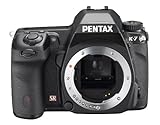

The Pentax K-7
Featuring a solid metal body, weatherproof sealing and a wide range of user-adjustable controls, it also supported high-speed continuous shooting at up to 5.2 frames/second and HD video recording at 30 frames/second.
The low-down: This 14.6-megapixel camera came fitted with the Pentax 18-55-millimetre lens. This is at the top of the company’s camera range. It has a magnesium-alloy body and is smaller than the K20D. It is weather-sealed and sports an excellent 920,000-dot LCD and 100 per cent viewfinder. It has an HD movie mode. Image stabilisation is by sensor shift. There are body-top and LCD information displays. All important controls are immediately accessible on the camera body, including a nifty white balance adjustment tool. This white balance tool itself is not unique to Pentax but the accessibility is. Among all the desirable features for serious photography is a killer innovation: true in-camera HDR (high dynamic range) processing.
Like: The in-camera HDR processing works by taking three exposures at widely spaced exposure values and then merging them into a single jpeg. Of course, it can really only work with the camera tripod mounted but that is true of any HDR sequence. The results from the Pentax K-7
High-quality movie recording at 1280 x 720 pixels; 30-frames-per-second
The Pentax K-7
Pentax K-7
- High-resolution, 14.6-megapixel CMOS sensor; compact, magnesium alloy body
- Weather resistant, dustproof, and coldproof (14 degrees F, -10 degrees C)
- Fast 5.2 fps shooting with the new PRIME II Image processing engine; top shutter speed of 1/8000 sec freezes even the fastest action in well-lit settings
- 3-inch LCD; Live View mode, with contrast AF, Face Detection, and optional histogram, grid, and bright/dark area display
- Capture images to SD/SDHC memory cards (not included)
Pentax K-7
This means you save $822.12 (that’s 44% off regular price!)

Pentax K-x: a colorful, small, powerful 12.4 MP entry-level DSLR fully-equipped with pro-features!


The Pentax K-x
The Pentax K-x
Along with the 12.4MP CMOS sensor, it has a 2.7 inch LCD screen, Live View, face detection, 720p HD video capabilities shooting at 24p, HDR bracketing, 4.7 fps, 11 point autofocus, and uses AA batteries.
The Pentax K-x
The Pentax K-x
Pentax K-x
- High-resolution 12.4-megapixel CMOS image sensor features sensor-shift Shake Reduction for stabilized image and video capture up to 4 stops max.
- Large 2.7-inch LCD features Live View with contrast, phase difference, and Face Detection autofocus (up to 16 faces).
- Capture widescreen HD video in full 720p resolution (1280×720) at 24fps cinematic framerate, using any Pentax 35mm lens.
- Highly compact DSLR body design allows for 1 handed operation and comfort when travelling.
- Powerful automatic modes, including Pentax Auto Picture and scene modes, ensure the perfect shot in any situation, while helping new photographers learn DSLR photography.
- Creative processing and filter modes produce high quality finished images, while offering the ability to explore artistic freedom through unique special effects.
- True HDR image capture blends 3 bracketed images into a single picture with outstanding shadow, highlight, and midrange detail.
- Fast 4.7fps capture speed and 1/6000 second maximum shutter speeds are possible with the Pentax PRIME II image processing engine.
- Responsive 11-point wide-angle SAFOX VIII autofocus system focuses quickly and accurately, and can easily track moving subjects.
- Capture up to 1900 shots with universally available, easy-to-find AA lithium batteries (also compatible with AA NiMH rechargeable and alkaline batteries).
- Expanded ISO range covers sensitivities from 100-12800 for extreme low light photography.
The Pentax K-x
Nikon deal! Purchase the new Nikon D300s and save 50% off the pocket-powerful Nikon Coolpix S710!
For a limited time, purchase Nikon’s next-generation D300s digital SLR and save 50% on the powerful, pocket-sized Coolpix S710.
Here’s some clue on this bast-Nikons-deal!
Nikon D300s
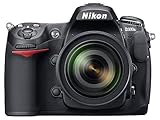

The Nikon D300 made a impressionable impact when it was first launched 2 years ago making it the semi-professional DSLR to beat. And in many respects it is still the camera to beat in that class. After 2 years, Nikon deemed it is time to up the ante, which most notably includes support for 720p video capture, and launched the D300S. The D300S will replace the D300 the same way the D70S replaced the D70 and it is looking to hold on to that high-end non-full frame slot for a long time.
Design
In line with tradition, the Nikon D300s
looks just like its older counterpart. The most notable addition is the three small holes just underneath the model number which is a microphone, a feature last seen in the D90.
Many of the new features on the Nikon D300s
are those that are already featured on recent Nikon DSLRs like virtual horizon from the D3 and movies from the D90. But one genuine new feature is the inclusion of contrast-detection autofocus that operates while in movie mode. This is a first for a Nikon DSLR.
There are some changes to the connection ports on the left. The HDMI output is now a mini HDMI port with a smaller Type-C specification.
Also new are twin card slots – one Type I CompactFlash and one SD/SDHC – with a full complement of write options. Either slot can be designated the primary one, with the secondary slot used for Backup (each photo is written to both cards) or Overflow (when the primary card is full the camera switches to writing to the secondary card). In addition, the Nikon D300s
can be configured to store NEFs on one and JPEGs on the other, plus photos can be copied between the cards too. Also interesting is the support for the newer Wi-Fi capable memory cards.
Many changes can also be found on the back where there is a repositioned “Lv” button which activates the Live view feature. Just below that is the “Info” which brings the Nikon D300s
up to the same level of usability as the D90. The dedicated “Info” button is extremely useful in that it lets you get to every camera setting and menu item using only your right hand.
Performance
The Nikon D300S is responsive and the improved frame rate is also a bonus. Still image focusing is fast and the AF viewfinder confirmation display is superb, the improved frame advance rate helps with fleeting subjects but seems to suffer when shooting uncompressed RAW files.
Metering and white balance are almost flawless. In terms of white balance, using auto WB setting seems to have a slight orange cast, but if you pick the correct WB setting for the picture by using a custom setting, the D300S renders natural looking images. Metering is excellent with the 3D Color Matrix.
In terms of image noise, shots in near darkness at ISO 1600 provide images with a good balance between image detail and noise. However, pushing ISO to 6400 results in images with an obvious level of noise.
Nikon Coolpix S710
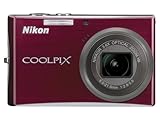

The Nikon Coolpix S710
Nikon + Nikon deal: how to apply!

Save $120 and get a Sony Alpha A330Y DSLR w/18-55 and 55-200 lenses kit!
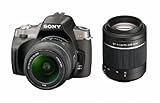

Replacing the A300 model, the Sony Alpha A330
Sitting in the middle of the Sony Alpha range above the entry-level A230 and and below the 14 megapixel A380, the Sony Alpha A330
Panasonic GF1: a serious competitor for Olympus E-P1 micro four-thirds compact camera
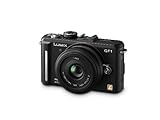

The Panasonic Lumix DMC-GF1
The Panasonic Lumix DMC-GF1
New for the LUMIX G Series, the Panasonic Lumix DMC-GF1
The Panasonic Lumix DMC-GF1
Canon PowerShot D10: cool summerproof and waterproof camera!
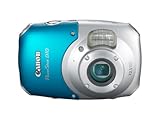


The Canon PowerShot D10
More regular features include a 12 megapixel sensor, 3x zoom lens with Optical Image Stabilization, 2.5 inch LCD screen, and new Smart AUTO, Blink Detection and FaceSelf-Timer modes.
The Canon PowerShot D10

A unique accessory kit with Canon PowerShot D10
Nikon Coolpix L100: easy, compact and with super 15x zoom lens, perfect holidays partner
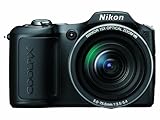

As part of the ‘Life’ series, the Nikon Coolpix L100 sits in the Nikon range towards the bottom end. Still, a 10Mp sensor and 15x optical zoom aren’t anything to be sniffed at. On the surface it does seem that the only reason this camera was released was to satisfy the consumers who wanted a big zoom and nothing else.
The Nikon Coolpix L100
On the back is the expected 3in LCD screen and very little else for simplicity’s sake.
Again, a few buttons are sat to the right of the screen for changing the mode you’re in or selecting macro, flash and drive options. The main modes are brought up for selection when you press the camera button. Easy auto makes everything point and shoot to a level I don’t normally experience. In this mode, the main menu allows you to change the resolution. That’s basically it for that mode, if you want to do anything else, you’ll have to choose the normal auto mode found at the bottom of the list.
There are only fourteen modes in the scene menu which is a little unusual for a camera that essentially takes control away from you. This could be down to the predictive auto systems that all cameras are having installed in them since Panasonic developed it. It works in the normal auto system and detects what type of photograph you’re taking then adjusts the mode the camera is in to suit. Of course, it can’t tell when you’re in a museum so there’s an option for that in the scene selections.
Looking at the menu and it’s just as simple as the rest of the Nikon Coolpix L100
In auto mode there’s only two tabs to choose from for recording options and set up. You can also change the resolution, white balance, drive modes, colour options and take advantage of the distortion control. This could be a distinct advantage with the wide angle lens as it will cause distortion otherwise they wouldn’t include the feature on the camera.
Full info on Nikon’s L100 page.
It’s an all-time compact and easy camera: the Nikon Coolpix L100
Olympus E-P1 Micro Four Thirds Rangefinder-style Camera First Thoughts and First Specs
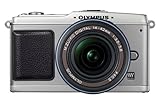

The compact new Olympus PEN E-P1
The Micro Four Thirds format was announced last August and since then we’ve been anxiously waiting to find out what Olympus would do with it. Panasonic has introduced two Micro Four Thirds cameras, the Lumix G1 and the GH1 with HD video. But until now, the only Micro Four Thirds action we’ve seen from Olympus was behind glass at tradeshows. But now there’s an Olympus Micro Four Thirds camera we can bank on – and it’s not just a list of specs and features, either.
Olympus PEN E-P1
The Olympus PEN E-P1
There is one detail to note about image quality – the new True Pic V image processor is supposed to have a significantly better signal-to-noise ratio and that should mean better high-ISO image quality (the E-P1 maxes out at ISO 6400). Since the Four Thirds sensor is smaller than APS-C sensors in most DSLRs, it’s a bit much to expect the E-P1 (as well as Four Thirds digital SLRs) to match their image quality. The E-P1 has an image-stabilized sensor so image stabilization is available regardless of the lens you use.
If you’ve got Leica M-rangefinder lenses you can get a Micro Four Thirds M-mount adapter and you’ll be able to shoot image-stabilized photos with Leica glass on the E-P1.
Excellent reference to the Olympus E-P1 can be found here:
- DPReview, excellent as always,
- CNET’s test, from which the above video
- DigitalCameraReview,
The Olympus PEN E-P1
Pentax Optio W80: tough, shock- and waterproof like no other digital camera!
Pentax has launched its latest waterproof camera promising to let you “go boldly where none have gone before.”


On the tough specs, the Pentax Optio W80
On the camera specs you get 12.1 megapixels, a 5x internal optical zoom (equivalent to 28-140mm), a slim body and a wide angle 28mm lens. There’s also a 2.5-inch LCD screen and HD movie capture capabilities that record resolutions up to 1280 x 720 pixels at full-speed 30fps.
There is also fast face detection that sees up to 32 faces in 0.03 seconds, with smile capture and blink detection, for perfect portrait shots.
Available in cardinal red, azure blue and gunmetal grey, the Pentax Optio W80
Sleek and sexy: Nikon Coolpix S60 10MP Digital Camera with 5x Optical VR Zoom
The Nikon Coolpix S60
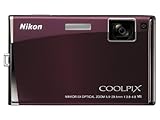
While the S60 comes equipped with a somewhat standard feature set, what makes it an easy, fun camera to shoot and show is its intuitive and responsive 3.5-inch touchscreen viewfinder.
Some of the features include a massive 10 mega pixel resolution which will enable you to print fantastic quality pictures of up to 16 x 20 inches as well as a 5x optical zoom lens with ‘VR image stabilization’. It has a 3.5 inch high resolution touch panel LCD screen and automatically adjusts the ISO up to 3200. One of the other great things is that you can save to an expandable memory slot in the form of SD/SDHC.
The Nikon Coolpix S60
This is a very good looking camera and has obviously been built for easy usage with the 20MB of internal memory, SD card expansion slot and JPEG, AVI and WAV formats.
The Nikon Coolpix S60
The Nikon Coolpix S60
We like the macro shot. It is very clear and has great definition.
Check the latest price for the Nikon Coolpix S60
